Microbial Testing of Herbal & Agricultural Powders: Parameters Every Supplier Must Know
In the B2B supply chain, rejection rarely happens for the reasons suppliers expect.
A batch may meet all visible specifications—color, texture, particle size—and still fail during quality evaluation. This often creates confusion, especially when everything appears compliant at first glance. However, the real issue usually lies deeper, in something that cannot be judged visually: microbial quality.
For manufacturers and raw material suppliers dealing with herbal and agricultural powders, this is where microbial testing becomes critical. It is no longer just a backend quality step—it directly influences approvals, procurement decisions, and long-term business relationships.
Even a single failed parameter can delay onboarding, trigger additional queries, or result in rejection.
Why Microbial Testing is Not Just a Formality in B2B Supply
To understand its importance, it helps to look at how buyers actually evaluate risk.
In practice, quality teams rely heavily on test reports to determine whether a material is suitable for use. Even if a product meets functional specifications, it may still be rejected if microbiologicall results fall outside acceptable ranges.
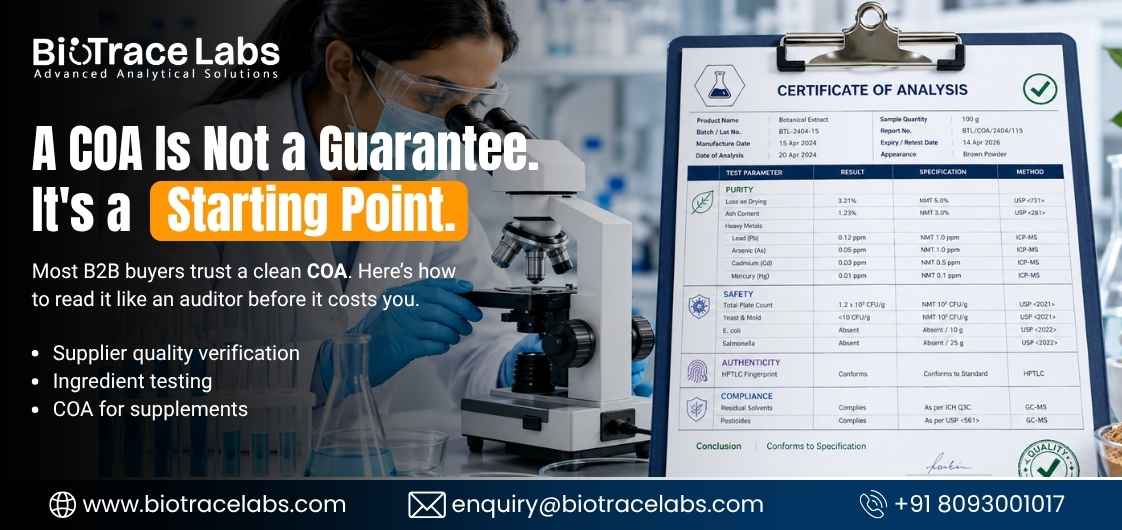
This is why many companies depend on verified reports from trusted microbiology testing labs before moving forward with supplier approvals. These reports act as a checkpoint, ensuring that the material is safe, stable, and compliant with application-specific requirements.
For suppliers, this means that testing is directly linked to business outcomes. Delays in procurement are often caused not by pricing or supply issues, but by gaps in documentation or non-aligned results.

Understanding the Core Microbial Parameters
With that context in place, the next step is to understand what buyers actually look for in reports.
Microbial parameters provide insight into how well a product has been handled, processed, and stored. Each parameter highlights a different aspect of quality and risk.
- Total Plate Count (TPC)
Total Plate Count reflects the overall microbial load present in the material.
It is one of the first indicators reviewed because it provides a general sense of hygiene during processing. A higher count may suggest exposure to conditions that allow microbial growth, such as improper drying or storage.
While it does not identify specific harmful organisms, it often signals whether the process is under control.
- Yeast and Mould Count
Beyond general microbial load, fungal contamination presents a different concern.
Herbal and agricultural powders are naturally more susceptible to yeast and mould due to their origin. These organisms thrive in moisture-rich environments and can affect product stability over time.
Elevated levels may reduce shelf life and, in some cases, lead to toxin formation, making this parameter especially important for long-term storage and export applications.
- Coliform Count
Another layer of evaluation focuses on hygiene indicators.
Coliforms are used to assess sanitation during processing. Their presence suggests that there may have been lapses in hygiene practices, such as issues with water quality or equipment cleanliness.
Although not always harmful on their own, they often act as warning signs that require further investigation.
- Pathogen Testing: A Non-Negotiable Requirement
While some parameters indicate quality trends, others define absolute acceptance criteria.
Pathogens such as Salmonella and E. coli fall into this category. These organisms pose direct health risks and must be completely absent.
Even a single positive result can lead to immediate rejection, which is why this aspect of microbiological testing carries significant weight in B2B evaluations.

Regulatory Expectations: More Than Just Passing Results
Once parameters are understood, aligning them with regulations becomes essential.
Different industries and markets follow different standards. In India, FSSAI provides guidelines for food-grade materials, while WHO recommendations are often used for herbal products. Export markets may apply stricter requirements.
These standards define acceptable microbial limits, which suppliers must meet depending on the product’s application and destination.
Working with a reliable microbiological testing laboratory helps ensure that results are not only accurate but also aligned with the correct regulatory framework.
Common Gaps That Lead to Rejection
Even with testing in place, certain gaps can still create problems during approvals.
One common issue is focusing only on final product testing, without monitoring earlier stages where contamination may occur. This makes it difficult to identify root causes.
Another challenge is incomplete documentation, such as generic reports without batch-level traceability. In some cases, suppliers may overlook specific parameters or delay contamination testing, which can slow down the evaluation process.
These gaps may seem minor individually, but together they can lead to repeated queries and delayed decisions.

What Buyers Look for in Microbial Quality Reports
Understanding buyer expectations helps suppliers align their approach more effectively.
Buyers are not just evaluating a single batch—they are assessing consistency across multiple supplies. They expect clear, batch-specific reports with defined limits and supporting documentation.
Consistency plays a key role here. Suppliers who demonstrate stable results over time are more likely to gain approval and build long-term relationships.
Building a Stronger Position Through Microbial Quality Control
This is where quality control becomes more than just a requirement—it becomes a differentiator.
Suppliers who maintain control across sourcing, processing, and testing stages reduce variability and improve reliability. This creates a smoother approval experience for buyers and minimizes back-and-forth during QA review.
In competitive B2B markets, consistency in microbial quality often becomes the deciding factor when other variables such as price and specifications are similar.

What Consistent Microbial Quality Means for B2B Success
Ultimately, everything comes down to how your product performs under evaluation.
Microbiological quality is not just a checklist—it reflects the overall integrity of the product. Understanding key parameters helps suppliers avoid rejection, improve documentation, and build stronger buyer confidence.
Because in B2B supply, quality is not defined by what is claimed—it is defined by what consistently meets expectations during evaluation.
A Practical Support Framework for B2B Suppliers
For suppliers looking to strengthen their quality validation process, working with the right testing partner can make a meaningful difference.
Labs like BioTrace Labs support B2B manufacturers and raw material suppliers with structured testing, audit-ready documentation, and batch-level traceability—helping simplify approvals and reduce delays during quality review.
Conclusion
In today’s B2B supply chain, microbiological quality is no longer just a technical requirement—it is a direct reflection of supplier reliability. Buyers are not simply purchasing a material; they are evaluating the consistency, safety, and compliance behind every batch.
For herbal and agricultural powder suppliers, understanding parameters such as TPC, yeast and mould count, coliforms, and pathogen absence is essential to reducing rejection risk and improving approval timelines. A strong microbiologica l profile, supported by clear and batch-specific documentation, creates confidence during quality evaluations.
Suppliers who treat microbiological testing as a strategic part of quality control—not just a last-step formality—position themselves ahead of competitors. Because in B2B markets, long-term growth is built not only on price or availability, but on the ability to deliver materials that consistently meet expectations.
📰 Latest Blogs