


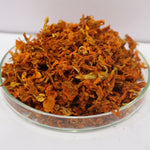
Marigold Botanical Reference Material
SKU: BL86271
Category: Botanical Reference Material (BRM)
|
Parameter |
Details |
|
Botanical Name |
Calendula officinalis |
|
Other Names |
Marigold, Pot Marigold, Calendula |
|
Plant Part Used |
Flower (ligulate florets) |
|
Family |
Asteraceae (Compositae) |
|
Chemical Constituents |
Faradiol monoesters (triterpene esters), quercetin and isorhamnetin glycosides |
|
Use |
HPTLC, herbal standardization, phytochemical fingerprinting, botanical authentication |
|
Product Form |
Whole Dry / Powdered (at 5% extra cost) |
|
Type |
Botanical Reference Material (BRM) / Testing purpose |
|
Reference Type |
Voucher-grade botanical reference material |
Why Use Marigold Botanical Reference Material?
Marigold (Calendula officinalis) is widely used in cosmetic, skincare, and herbal-product testing. A characterized botanical reference material provides laboratories with a defined plant material for comparison during identity testing, chromatographic fingerprinting, and raw-material quality assessment.
BioTrace Labs' Marigold Botanical Reference Material is intended for analytical and research applications including HPTLC profiling, botanical authentication, phytochemical comparison, and herbal raw-material standardization.
HPTLC Analysis Profile
- HPTLC compliant, using an optimized marigold HPTLC fingerprint method
- Detection under UV 254 nm / 366 nm, plus derivatization
- Produces a reproducible faradiol ester and flavonoid fingerprint for identity confirmation
Applications
- Cosmetic and herbal raw-material standardization, and marigold botanical authentication
- Quality control laboratories running comparative phytochemical analysis
- Academic and industrial research using Calendula officinalis BRM
- Detecting adulteration or substitution with Tagetes species (a different genus also called “marigold”), other yellow/orange composite flowers, or artificially dyed petals sold as genuine calendula
Documentation Provided
Certificate of Analysis (CoA) provided on request, downloadable via the “Download CoA” button or by using “Ask a Question.”
Packaging & Storage
- Packed in airtight, light-resistant containers
- Store in a cool, dry place, protected from light and humidity to preserve faradiol ester and flavonoid content
Disclaimer
For analytical and research purposes only. Not intended for direct consumption.
Frequently asked questions
What is Marigold Botanical Reference Material?
What is a marigold HPTLC fingerprint used for?
How does this BRM support botanical authentication of marigold?
What are the key phytochemical markers in this Calendula officinalis reference material?
Can this BRM detect adulteration with Tagetes marigold or other flowers?
Is this BRM available in bulk from a supplier?
Does this BRM come with a Certificate of Analysis (CoA)?
How should this BRM be stored to preserve its active markers?
Do you ship Marigold Botanical Reference Material within the USA?


